
Build it right. Secure it early. Deploy with confidence
Sarah Zalusky – JKI
As software-defined test systems continue to grow in complexity, ensuring security and reliability can no longer be an afterthought. This session explores how LabVIEW teams can adopt a shift-left approach to embed security, quality, and compliance directly into the development process from day one.
We’ll cover modern best practices for developing secure and reliable LabVIEW applications, including early-stage static analysis, SBOM generation, and proactive identification of software weaknesses and vulnerabilities. Attendees will learn how to move beyond reactive fixes and instead build development workflows that continuously surface risk, improve code quality, and align with evolving regulatory expectations.
With real-world insights from test and measurement environments, this talk highlights practical steps teams can take today and how to stay ahead of what’s coming next.
Architecture First, Logic Second
Peter Scarfe – Scarfe Controls
Most developers start by writing logic. It feels natural, productive, and fast. But as systems grow, that early momentum often turns into complexity that’s difficult to manage.
This talk explores a different approach: define the architecture first, then build the logic within it. By establishing clear process boundaries, communication patterns, and responsibility hierarchies up front, developers can create applications that scale more naturally and remain easier to understand over time.
We’ll unpack what “architecture first” really means, and why this shift in thinking fundamentally changes how complex systems are built.

DevOps & Git for LabVIEW Development
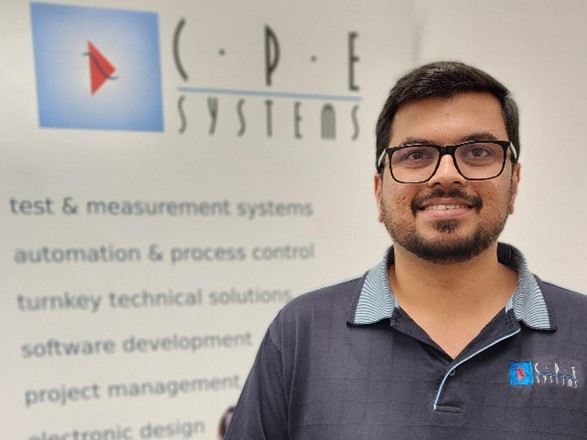
Anoop Nandakumar – CPE Systems NZ
DevOps and Git have been widely adopted by text-based software developers for several years. However, many LabVIEW developers still rely on SVN. At CPE Systems NZ, we have been transitioning from SVN to Git and DevOps over the past few months.
This presentation will focus on
- Benefits of DevOps & Git vs SVN
- Transitioning from SVN to Git (including commit and version history)
- Using DevOps tools for Software Development Management in a Team
- Using Git for LabVIEW Development and version control in a Team
- Diff and merge of code, enhanced by new features in LabVIEW 2025 Q1.
- Using DevOps to control and document reusable LabVIEW Code and maximize the value of Software Intellectual Property
The presentation will also include demos on the above topics, using Microsoft Azure DevOps as an example platform.
Labkoff or BeckVIEW – easy to integrate either way
Mihai Costach – Enviseng
How LabVIEW can integrate with Beckhoff controllers and what opportunities such integration opens up. The presentation will include a live demonstration showing off the versatility of LabVIEW’s ability to integrate with both NI and non-NI hardware

A Cost-Effective Scalable Test System using Acroname Hardware, LabVIEW+ and SystemLink
Richard Grzebebieta – Inner Range
This presentation details the development of a modular bed-of-nails test system engineered for efficient, high-volume manufacturing test applications
The system leverages the flexibility of Acroname Manufacturing Test Modules (MTM) for precise and configurable hardware control. It integrates with a National Instruments software stack, using LabVIEW for low-level instrument communication and user interface design, and TestStand for robust, scalable test sequence management and execution
All test data is centrally collected and managed through SystemLink, providing comprehensive test traceability, real-time manufacturing insights, and centralized system management. This architecture significantly reduces test-time, enables “”plug-and-play”” fixture interchangeability, and provides a framework for scaling from prototype to full production. Attendees will learn how this integrated approach addresses common challenges in fixture repeatability, test sequencing, and data traceability for modern PCBA testing
Richard will walk through the design methodology, demonstrating how this modern toolchain can optimize test coverage and throughput while ensuring complete product traceability.
Virtual Front Panels – User Defined GUI at Runtime
Troy Kujawski – Robert Bosch (Australia)
Troy leads a team responsible for reliability testing at Robert Bosch Australia
He will describe their development of a Virtual Front Panel which provides fast, clean and flexible user interfaces for multiple test applications from a single common code base
The talk will cover the program architecture, hardware abstraction layer and the lessons learned in making a dynamically configurable UI in LabVIEW
Modernizing LabVIEW CI/CD with Containers: From Desktop to Pipeline
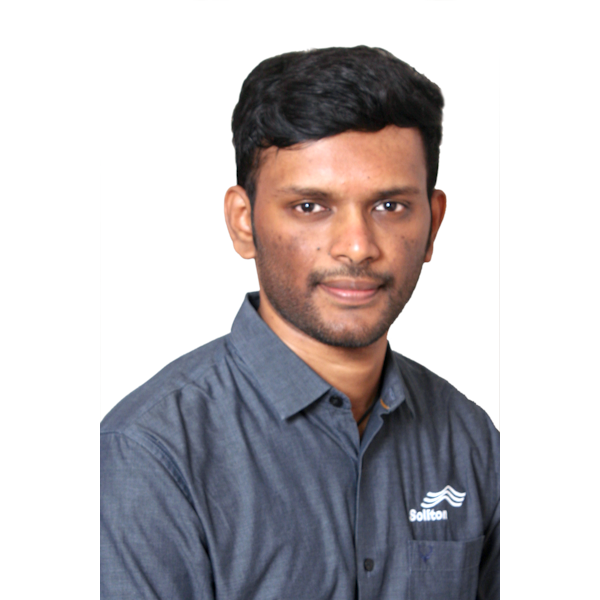
Pranay Chandragiri – Soliton Technologies
LabVIEW teams have long relied on heavyweight virtual machines for CI/CD – but slow spin-up times, gigabytes of overhead, and brittle environments are holding LabVIEW developers back from the fast, reliable automation that modern software teams expect. Containers change everything.
In this session, you’ll discover how NI’s official headless LabVIEW container images unlock a new era of CI/CD automation. We’ll start from first principles — demystifying containers, how they differ architecturally from VMs, and why LabVIEW is uniquely positioned to benefit
You’ll see how to pull NI’s pre-built LabVIEW images from Docker Hub, mount VI source directories, and invoke LabVIEWCLI to automate Mass Compile, VI Analyzer and Unit tests — all headless, no GUI, no licensed workstation in the loop. We’ll wire this into a GitHub Actions pipeline and demonstrate a complete CI workflow live, in under 15 minutes.
Going further, we’ll explore how to build custom LabVIEW container images bundled with your project’s exact dependent softwares, giving your team full toolchain control without sacrificing reproducibility.
We’ll close with best practices that separate a fragile proof-of-concept from a production-ready pipeline – structuring volume mounts cleanly, keeping images version-controlled, and designing pipelines that fail fast and report clearly.
LabVIEW DevOps is here — and it’s more accessible than before.
One Bus to rule them all, One Bus to find them, One Bus to bring them all and in the LabVIEW Abstraction bind them
Tim Streeter – SoftWire Systems
As LabVIEW applications grow, the challenge is not only managing internal application data, but also handling the many ways a system interacts with the outside world. Whether the source is application state, hardware I/O, Modbus registers, shared variables, or other value-oriented interfaces, developers often end up writing custom plumbing that increases complexity and tight coupling.
This presentation introduces Omni-Bus, a LabVIEW library that provides a common value-based abstraction layer for accessing and sharing both application data and external I/O. By treating these different sources through a unified abstraction, Omni-Bus helps reduce architectural complexity, improve modularity, and make systems easier to extend, test, and maintain.
The talk will explore the motivation behind the library, the kinds of problems it is designed to solve, and how a common abstraction for value-based data exchange can unify communication across software modules and interfaces without tightly binding code to specific implementations. Attendees will leave with a practical understanding of how this approach can simplify larger LabVIEW systems and support cleaner, more scalable architectures
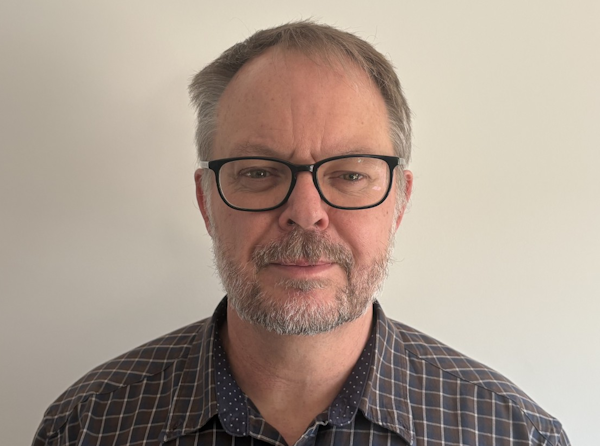
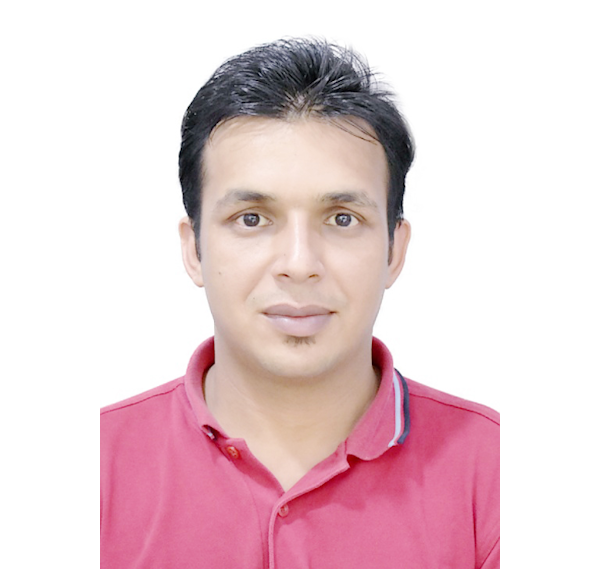
Physics-Guided AI for Transparent Material Inspection: Bridging Optical Science and Computer Vision for Smarter Manufacturing
Mustafa Nawaz – Shenyang University of Technology
This presentation explores how optical instrumentation, machine vision, and artificial intelligence can be combined to improve the inspection of transparent industrial
materials such as wafers, glasses, optical components, and semiconductor substrates
Transparent materials present unique challenges for automated inspection because defects often exhibit very low contrast and their appearance can change due to optical effects such as birefringence and polarization. Traditional machine vision systems frequently struggle to produce consistent results under these conditions
A physics-guided imaging approach can improve data quality before it reaches the AI model – by using a controlled optical setup incorporating polarization optics and wavelength stabilization, defect visibility can be significantly enhanced during image acquisition. Computer vision and deep learning methods can leverage these improved images for more reliable defect detection
In addition to the technical concepts, the session will highlight the importance of integrating domain knowledge into measurement and inspection systems rather than relying solely on increasingly complex AI models. Attendees will gain insight into the complete workflow, from optical system design and image acquisition to data processing and machine learning integration. While the project uses modern computer vision techniques, the focus is on practical engineering considerations, system design, and lessons learned from developing a real-world inspection platform
A Scalable Architecture for LabVIEW OOP and TestStand Integration
John Theodore
In modern manufacturing, where seconds directly impact productivity, inefficient software architecture can become a critical bottleneck. This presentation introduces a scalable and modular approach for interfacing LabVIEW Object-Oriented Programming (OOP) with NI TestStand in camera production systems
Conventional integration methods – such as direct class member calls, wrapper VIs, and session objects – often result in repeated object instantiation, tight coupling, or increased configuration overhead, limiting both performance and maintainability
To address these challenges, a hybrid approach is proposed that combines wrapper-based design with persistent TestStand object handling. In this method, class instances are initialized during process setup, stored as TestStand variables, and reused across multiple sequence steps, with cleanup performed at process termination. This enables efficient state management while avoiding repeated initialization costs
The architecture is applied across key camera production stages including assembly, active alignment, and end-of-line testing. Each stage uses configurable TestStand sequences driven by extensive XML-based station and product configurations. By encapsulating configuration data within LabVIEW classes, the system achieves a unified and extensible framework for managing hundreds of parameters across machinery and software modules
The proposed design delivers a highly generic, configuration-driven solution that supports future scalability while significantly improving runtime performance. Compared to previous implementations, production cycle times are reduced from minutes to seconds, enabling a substantial increase in manufacturing productivity. This approach is applicable to a wide range of automated test and production systems requiring both flexibility and high efficiency.

Lightning Talks
| Michael Ospishchev – RIS Engineering | LabVIEW and Google Maps API are a great combination for creating user interfaces and professional testing of GPS |
| Stuart Trevillian – SoftWire Systems | Self-Managed Configuration Files in LabVIEW |